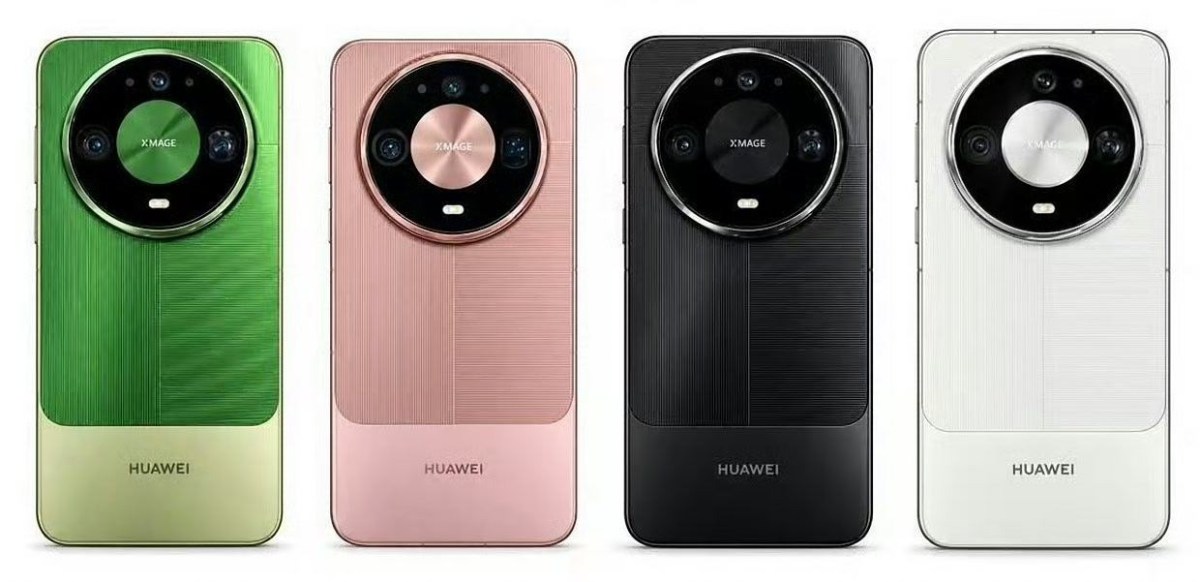
On Sale the Same Day It Launched
Huawei announced the Mate 90 series on the morning of October 1 and opened sales that same afternoon — an unusually aggressive flagship release cadence. Five models arrived at once: Mate 90, Mate 90 Pro, Mate 90 Pro Max, the Pro Max Collector’s Edition, and the top RS Ultimate.
The highlights are concentrated in three areas: chip efficiency, camera hardware, and a novel clip-on camera system.
Three Kirin Tiers, Honestly Differentiated
Huawei skipped the “one chip for everyone” approach and split the range into three tiers:
| Model | Chip | Cores | GPU (clock) |
|---|---|---|---|
| Mate 90 | Kirin 9030 | 8 (1+3+4) | Maloon 935A (933MHz) |
| Mate 90 Pro | Kirin 9035 | 9 (1+4+4) | Maloon 935 |
| Mate 90 Pro Max / RS | Kirin 9050 Pro | 9, 16 threads | Maloon 955 (1056MHz) |
Notes on the top-chip Kirin 9050 Pro:
- GPU at 1056MHz — the first Kirin GPU past 1GHz
- 6 compute units with hardware ray tracing; claimed rendering performance up 142% versus last generation
- Geekbench 7 multi-core around 8,159, which Huawei says already beats Apple’s A17 Pro
- Key tech: logic folding — logic blocks stacked vertically cut signal paths and latency while raising transistor density by roughly 55%
The 9030/9035 in cheaper models are simply the 9050 Pro with one big core and a lower GPU removed — a clean trade for better pricing and supply stability.
⚠️ Note: the Pro Max’s 12GB variant uses the Kirin 9050 (non-Pro); only the 16GB model gets the 9050 Pro.
Additional claim: Huawei lists full-device performance gains of +27% (standard), +20% (Pro), and +31% (Pro Max/Collector’s/RS).
Display and Battery: Pro Max Goes All Out
- Display: 6.75 inches on the standard model; Pro and Pro Max step up to second-gen Linglong dual-layer OLED. The Pro Max/RS add full-color Linglong with BT.2020 support and 10,000-nit peak brightness, readable in direct sunlight.
- Battery: Pro Max at a confirmed 6800mAh; the silicon-carbon cell talk remains industry speculation.
- Memory: 12GB baseline; Pro Max offered in 12/16GB, Collector’s and RS at 16GB.
- Protection: IP68 + IP69 across the lineup.
- System: HarmonyOS 7 out of the box.
The Headliner: A Clip-On “Ruiying Z10” Modular Camera
The Collector’s Edition and RS support an attachable Ruiying Z10 camera module (sold separately at ¥5,999), locked on through a physical HyperClick mount:
- 1-inch sensor, 24–240mm equivalent, with 10x continuous optical zoom (F2.0–F4.5)
- Zoom from the body, or twist the barrel for manual zoom
- Connects physically; the phone handles ISP and storage, and the camera app opens on attach
- On-site demo: a skeuomorphic camera UI with color-card selection, a smart button for focal lengths, and XMAGE Smart Shot
⚠️ Common misconception: the add-on camera connects via the physical HyperClick mount, not magnets and not NearLink — NearLink is only the outdoor mode’s auto-SOS feature.
Plainly: this turns a “telescope” into a detachable accessory. For concerts or ball games, you no longer need to haul a 1-inch compact, while the phone itself stays thin for daily use.
Who Should Wait, Who Should Buy
Skip it: Mate 80 / 80 Pro owners — the gains boil down to telephoto options and a GPU bump, hardly day-to-day night-and-day.
Consider it: anyone who wants “a phone plus a detachable telephoto,” or shoots concerts/games year-round — the Collector’s and RS are the rare options with a modular camera. On a budget? The standard or Pro keeps the second-gen OLED and new Kirin chip (though the dual-layer Linglong display is Pro and up only). China pricing: ¥5,999 / ¥6,999 / ¥9,499 / ¥10,999 / ¥12,999 across the five.
Summary
Whether the Mate 90 series wins comes down to whether the clip-on camera ecosystem catches on, not the spec sheet. Splitting imaging into “base + optional add-on” keeps the body thin, but the strongest setup costs extra — the module isn’t included.
I’ll keep tracking this clip-on camera in follow-ups and hold judgment on “future or gimmick” until there’s more hands-on data.
Based on Huawei’s official announcements; battery capacity and pricing were officially confirmed. Geekbench and transistor-density figures come from third-party tests and media, flagged in-line. Overseas availability hasn’t been announced; prices listed are China’s official launch pricing.